


Summary: Key Takeaways
If you’re deciding between thermal break aluminium windows & doors and standard aluminium frames, the short answer is:
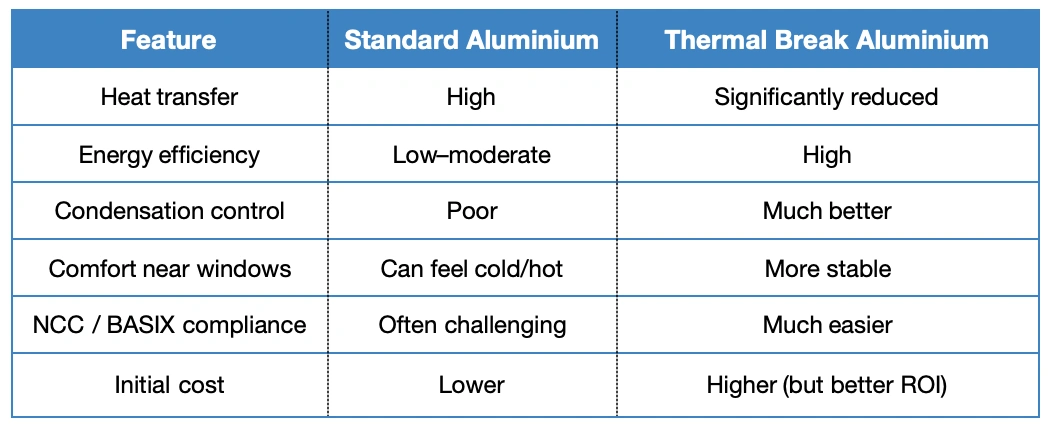
Yes — thermal break is worth it for most Australian homes, especially in climates with temperature extremes or strict energy requirements.
Thermal break aluminium windows & doors offer:
1. Significantly better insulation (reduced heat transfer)
2. Lower heating and cooling costs
3. Improved indoor comfort year-round
4. Better condensation control
5. Easier compliance with NCC / BASIX energy requirements
Standard aluminium frames may still suit some projects, but for modern homes, renovations, and high-performance builds, thermal break systems deliver measurable long-term value.
This guide explains how thermal break works, when it matters, and which Australian homes benefit most — in clear, practical terms.
What Is a Thermal Break Aluminium Window?
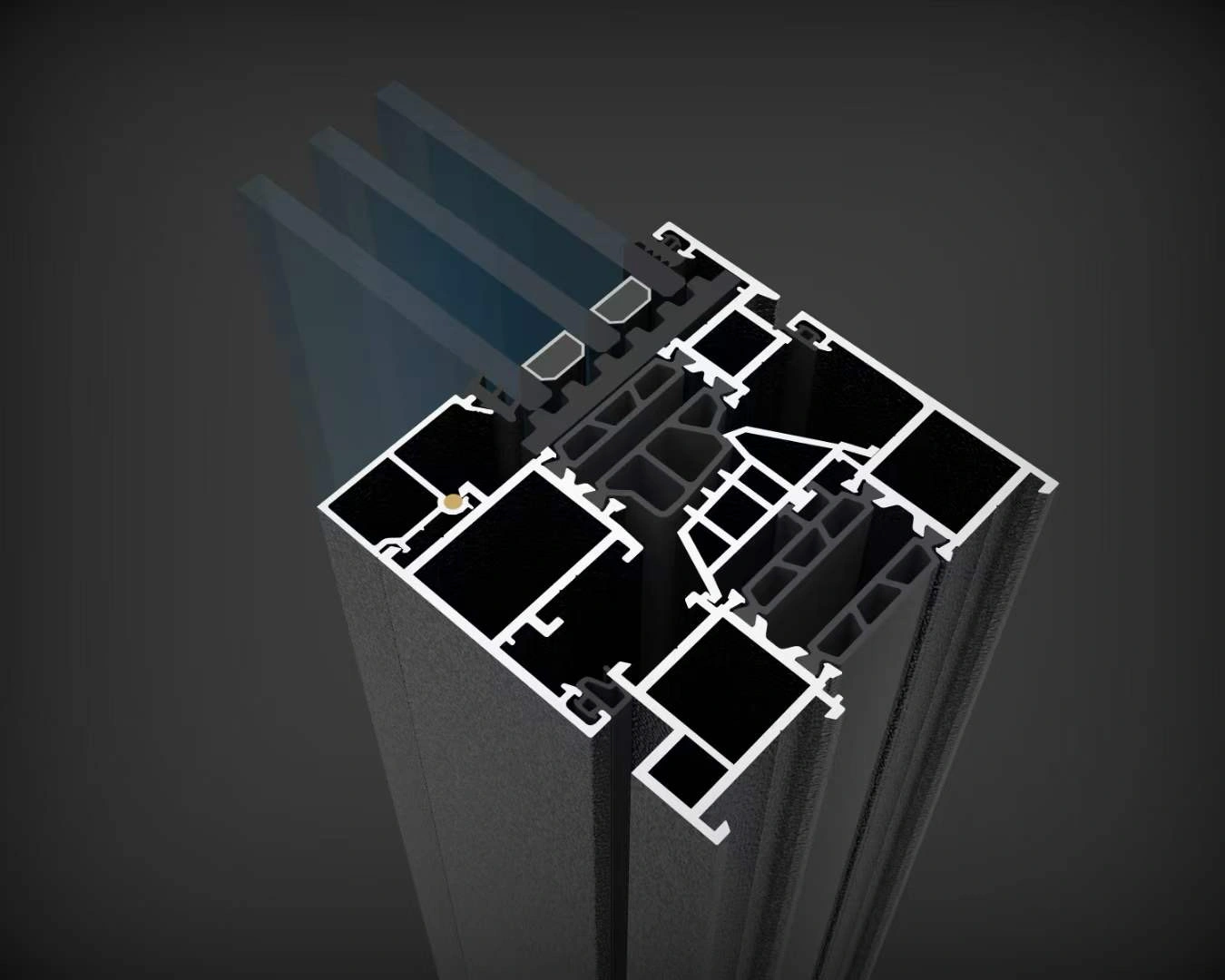
A thermal break aluminium frame includes a non-conductive barrier, usually made from polyamide, between the inner and outer aluminium sections.
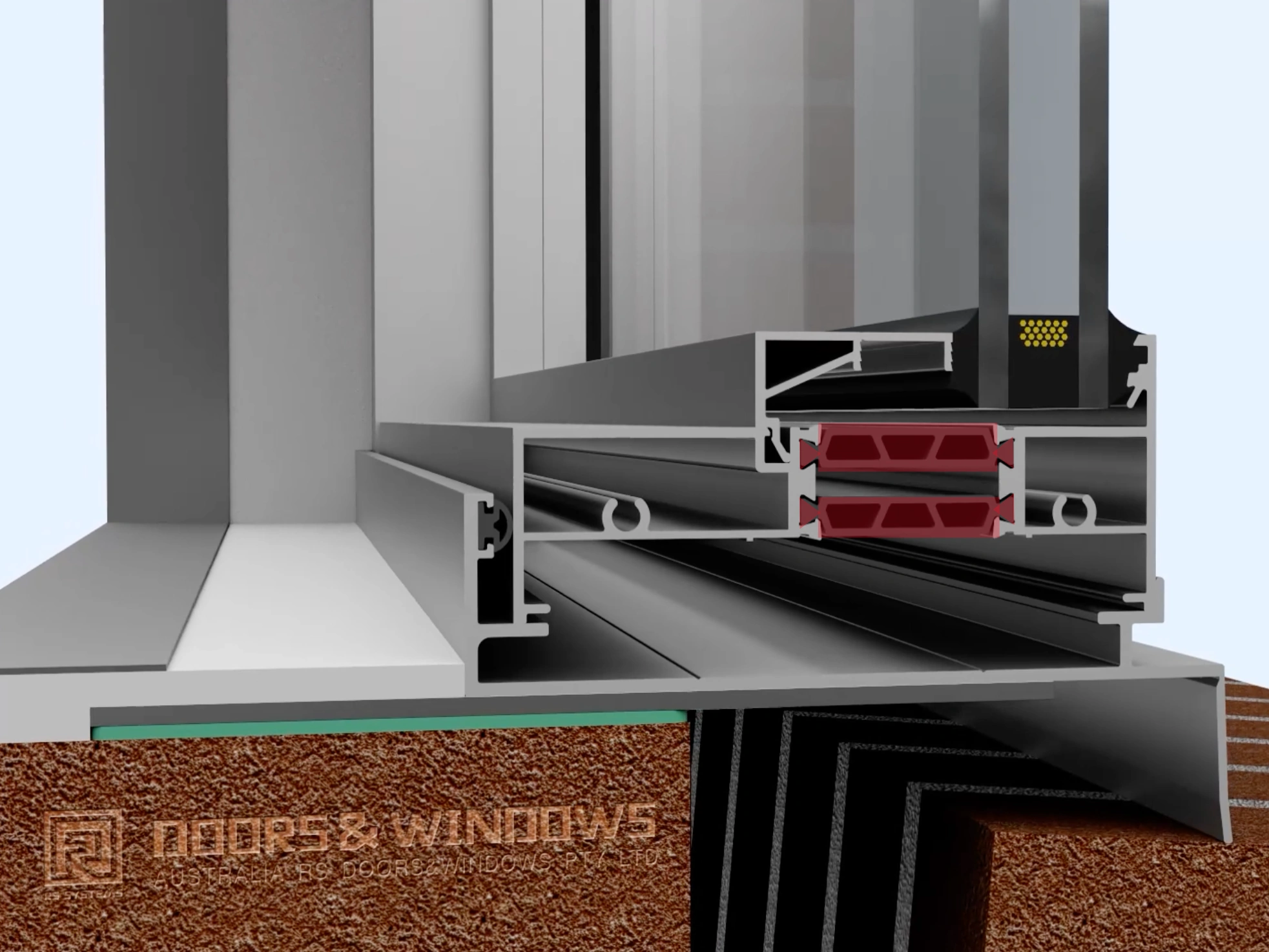
This barrier (Mark in Red):
- Interrupts heat flow
- Prevents outside temperatures from transferring indoors
- Improves overall window thermal performance
In contrast, standard aluminium frames are fully conductive, allowing heat and cold to pass straight through the frame.
Why Aluminium Frames Matter More Than You Think
In Australian homes, windows can account for:
- Up to 40% of heat loss in winter
- A significant portion of heat gain in summer
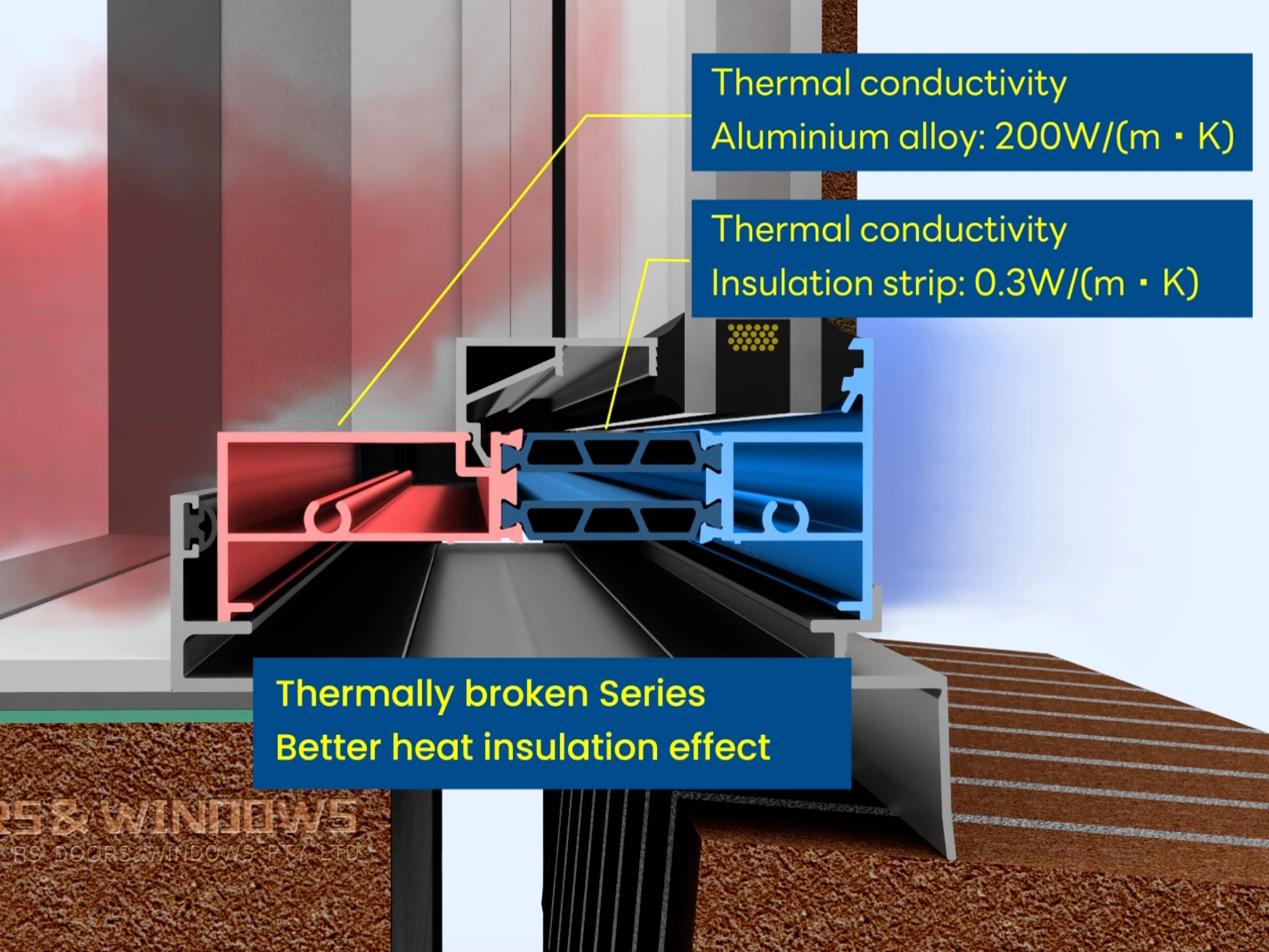
While glass often gets the attention, frames play a critical role — especially in large window and door systems.
Without a thermal break:
- Aluminium frames become thermal bridges
- Indoor comfort suffers, even with good glass
- Energy efficiency targets are harder to achieve
When Is Thermal Break Worth It in Australia?
1. Homes in Temperature-Extreme Climates
Thermal break aluminium windows are highly recommended for:
- Sydney
- Melbourne
- Canberra
- Adelaide
- Perth
- Elevated or inland areas
These regions experience hot summers and cool winters, where thermal performance matters most.
2. Large Glass Areas & Modern Designs
If your design includes:
- Floor-to-ceiling windows
- Open-plan living spaces
Then thermal break frames become critical for comfort and compliance.
3. BASIX / NCC Compliance Pressure
Australian energy regulations continue to tighten. Thermal break aluminium systems help:
- Achieve lower U-values
- Improve NatHERS modelling results
- Reduce the need for costly design compromises
In many cases, upgrading the frame avoids over-specifying the glass.
What About Standard Aluminium — When Is It Still OK?
Standard aluminium frames may still suit:
1. Budget-driven projects
2. Internal partitions
3. Mild climate zones
4. Small window openings
5. Non-habitable spaces
However, even in these cases, homeowners should understand the long-term comfort and energy trade-offs.
Thermal Break + Glass: The Best Combination
Thermal break frames perform best when paired with:
- Double glazing
- Laminated glass (for acoustics)
This creates a balanced system, rather than relying on glass alone.
Common Misconceptions
❌ “Double glazing alone is enough.”
✅ Frames still conduct heat without a thermal break.
❌ “Thermal break is only for cold climates.”
✅ It reduces both heat gain and heat loss.
❌ “The difference is minimal.”
✅ Real-world comfort and energy bills tell a different story.
Final Verdict: Is Thermal Break Worth It?
For most Australian homes, the answer is yes. If your project prioritises:
- Comfort
- Energy efficiency
- Long-term performance
- Modern architectural design
Then thermal break aluminium windows are a smart, future-proof investment.
Contact us for further consult
Not sure whether thermal break aluminium is right for your project?
Our team can assess your location, design, and energy requirements to recommend the most suitable window and door system.
Contact us to discuss your project or visit our showroom to experience the difference in person.