


What You Need to Know
If you’re building a new home in Australia, timing your window and door order is critical.
Order too early, and design changes may cause delays or rework; Order too late, and your project risks construction hold-ups and rushed decisions.
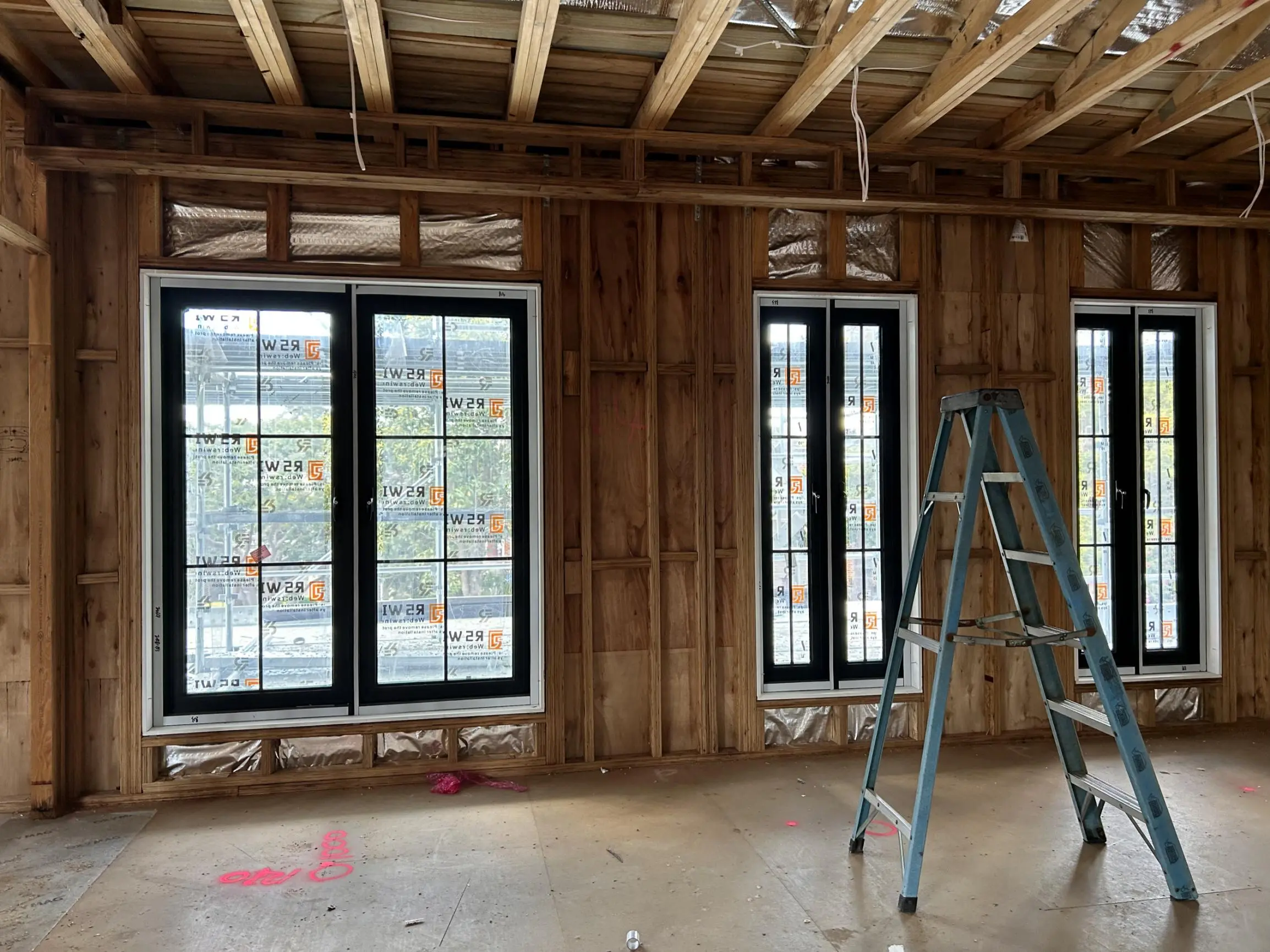
In most Australian builds, windows and doors should be finalised and ordered shortly after framing begins — well before lock-up stage.
This guide explains the full home building process in Australia and clearly shows when windows and doors come into play, so you can plan confidently and avoid costly mistakes.
Typical New Home Building Stages in Australia
While details may vary slightly between states and builders, most Australian residential builds follow the same core sequence:
1. Design & approvals
2. Site preparation & slab
3. Framing
4. Window & door ordering (critical stage)
5. Lock-up
6. Internal fit-out
7. Completion & handover
Let’s walk through each stage — with a focus on where windows and doors fit into the process.
1. Design, Planning & Council Approval
1) What Happens
- Architectural design and floor plans finalised
- Engineering drawings prepared
- BASIX / NCC energy requirements assessed
- Council or private certifier approvals obtained
2) Window & Door Considerations
At this stage, window and door locations, sizes, and performance requirements are typically defined — but products are not ordered yet.
Key decisions made here:
- Window and door positions
- Approximate opening sizes
- Energy and acoustic requirements
- Style direction (sliding, awning, fixed, slimline doors, etc.)
This is the best time to consult a window supplier for design feasibility — especially for large openings, slimline sliding doors, or floor-to-ceiling glazing.
2. Site Preparation & Concrete Slab
1) What Happens
- Site clearing and earthworks
- Plumbing and services rough-in
- Concrete slab poured and cured
2) Window & Door Considerations
No windows or doors are installed at this stage.
However, slab levels and finished floor heights will later affect:
- Door thresholds
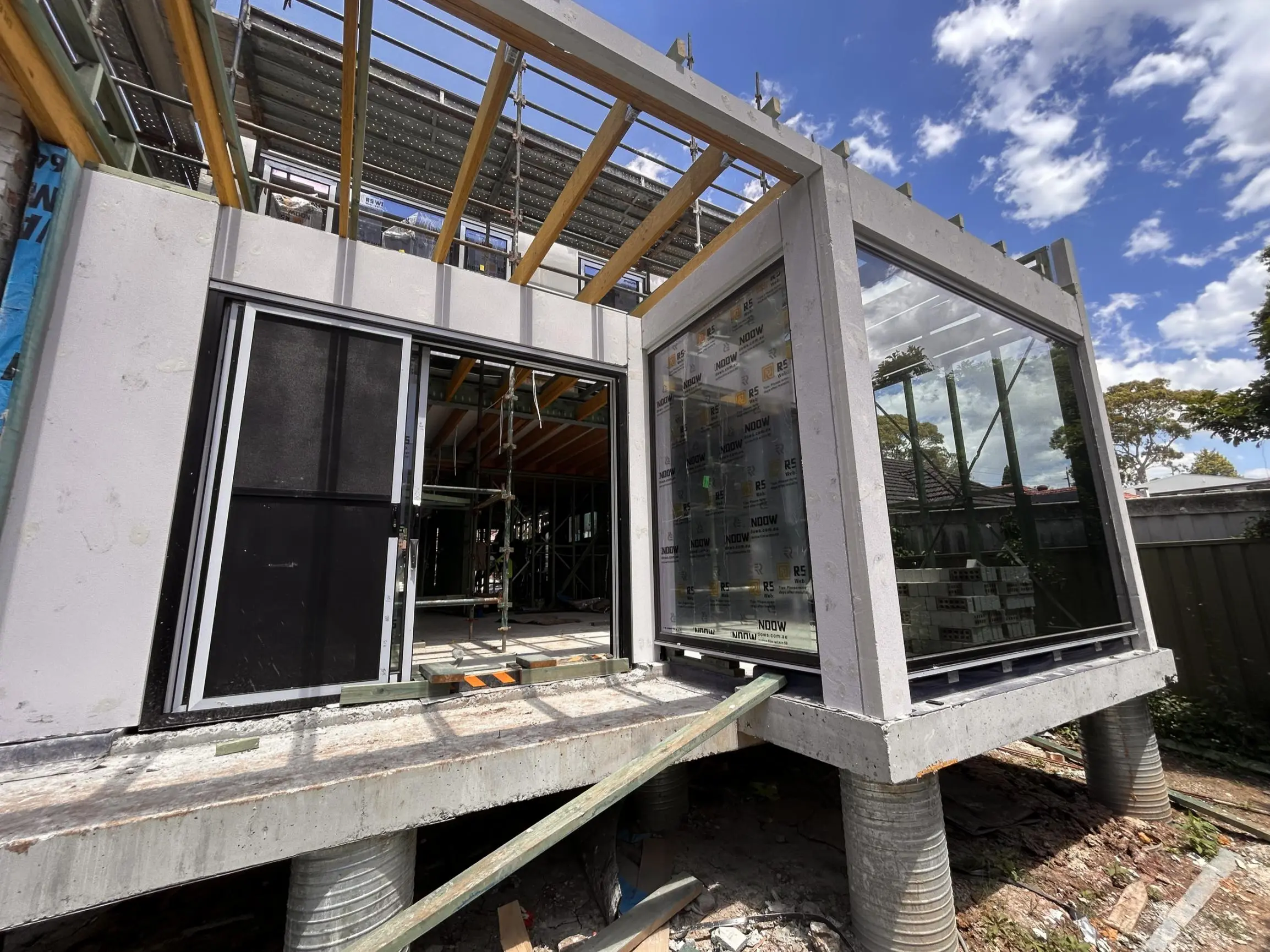
- Track recessing (for concealed or flush sliding doors)
If you plan to use concealed tracks or flush thresholds, flag this early so allowances can be made during slab design.
3. Framing Stage (The Critical Trigger Point)
1) What Happens
- Timber or steel frames erected
- Roof trusses installed
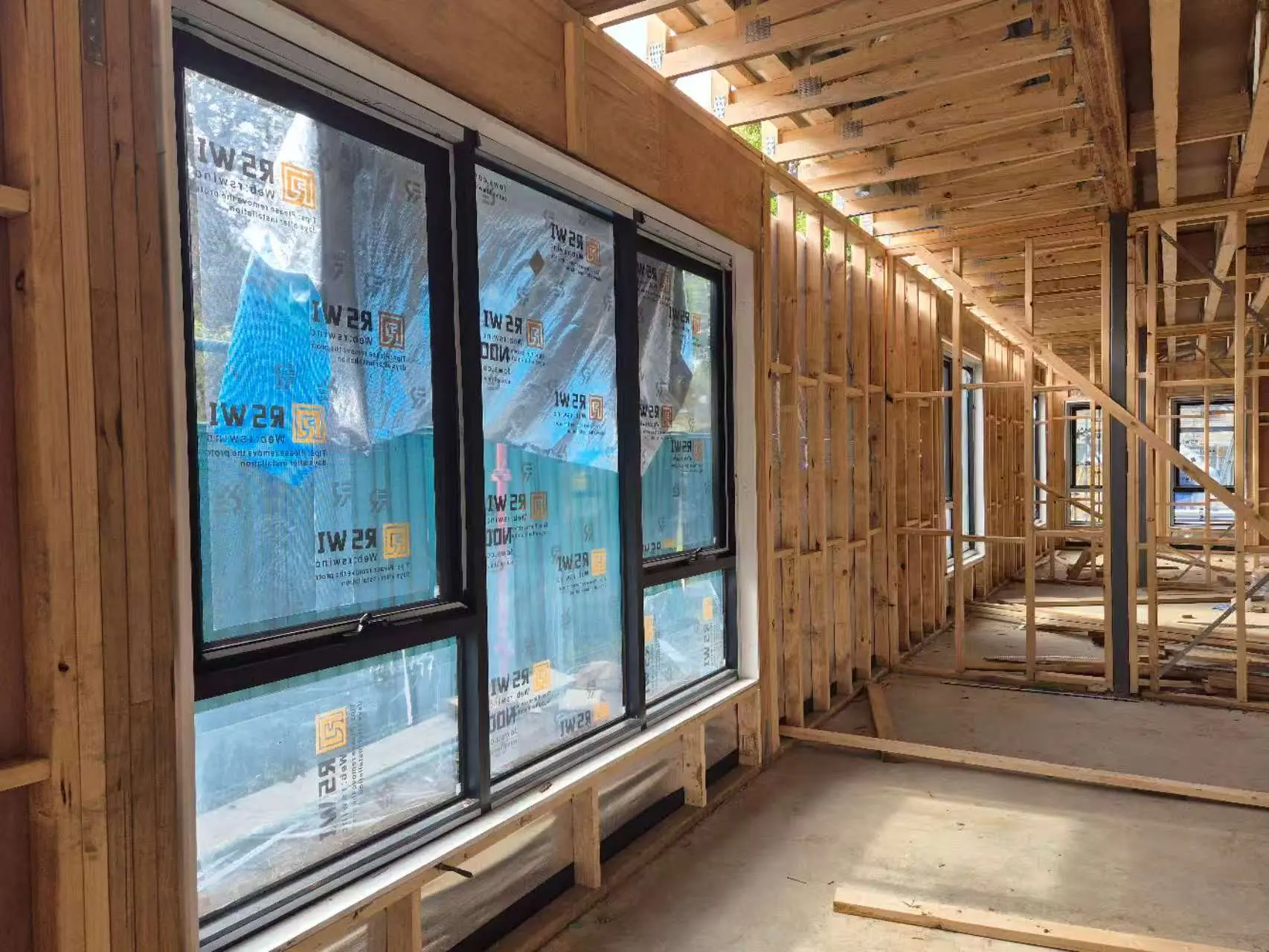
- Window and door openings clearly formed
* This Is When You Should Start Ordering Windows & Doors *
Once framing is up, all opening sizes are confirmed, making this the ideal time to:
- Finalise window and door specifications
- Conduct on-site measurements
- Confirm glass type, frame system, and finishes
2) Place your window and door order
Industry standard: In Australia, windows and doors are typically ordered immediately after framing begins or is completed.
4. Window & Door Manufacturing Period
1) What Happens
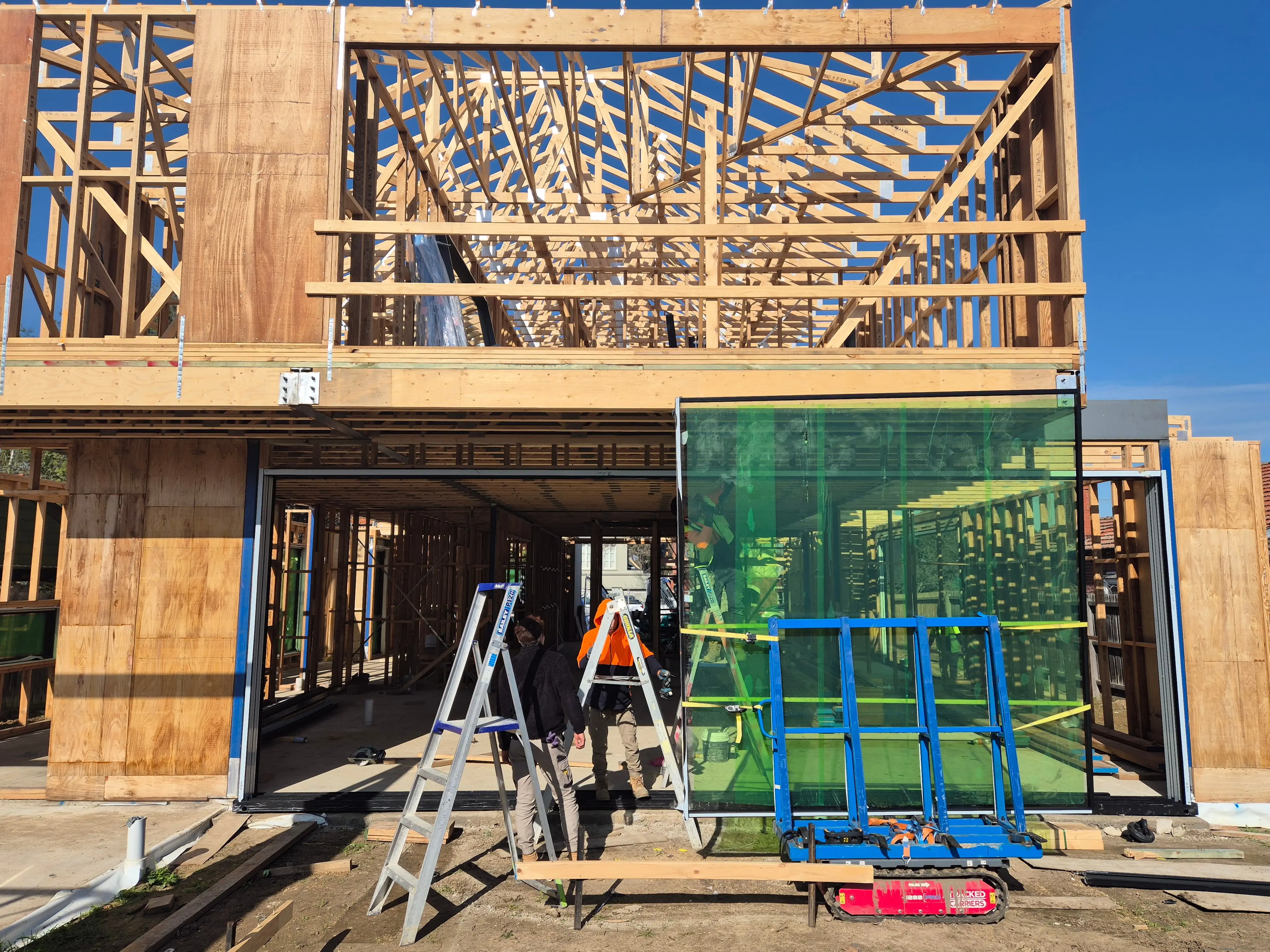
- Custom windows and doors are fabricated
- Glass is processed and assembled
- Frames are finished (powder coating, thermal break, etc.)
2) Typical Lead Times
- Standard local aluminium windows: 4–6 weeks
- Standard overseas aluminum windows: 10-12 weeks
* Why timing matters*
Delaying your order can directly delay lock-up and all subsequent trades. Choosing the right window company and placing the order in time is critical.
5. Lock-Up Stage (Windows & Doors Installed)
1) What Happens
- External windows and doors are installed
- Roof covering completed
- External walls enclosed
At this stage, the house can be locked and secured — hence the name “lock-up”.
2) Why This Stage Is So Important
- Protects the interior from weather
- Allows electrical and plumbing rough-ins to proceed
- Enables internal works to begin
If windows or doors are delayed, the entire project timeline might stall here.
6. Internal Fit-Out Stage
1) What Happens
- Electrical and plumbing rough-ins
- Insulation installed
- Plasterboard and internal linings
- Kitchens, bathrooms, flooring
2) Window & Door Role
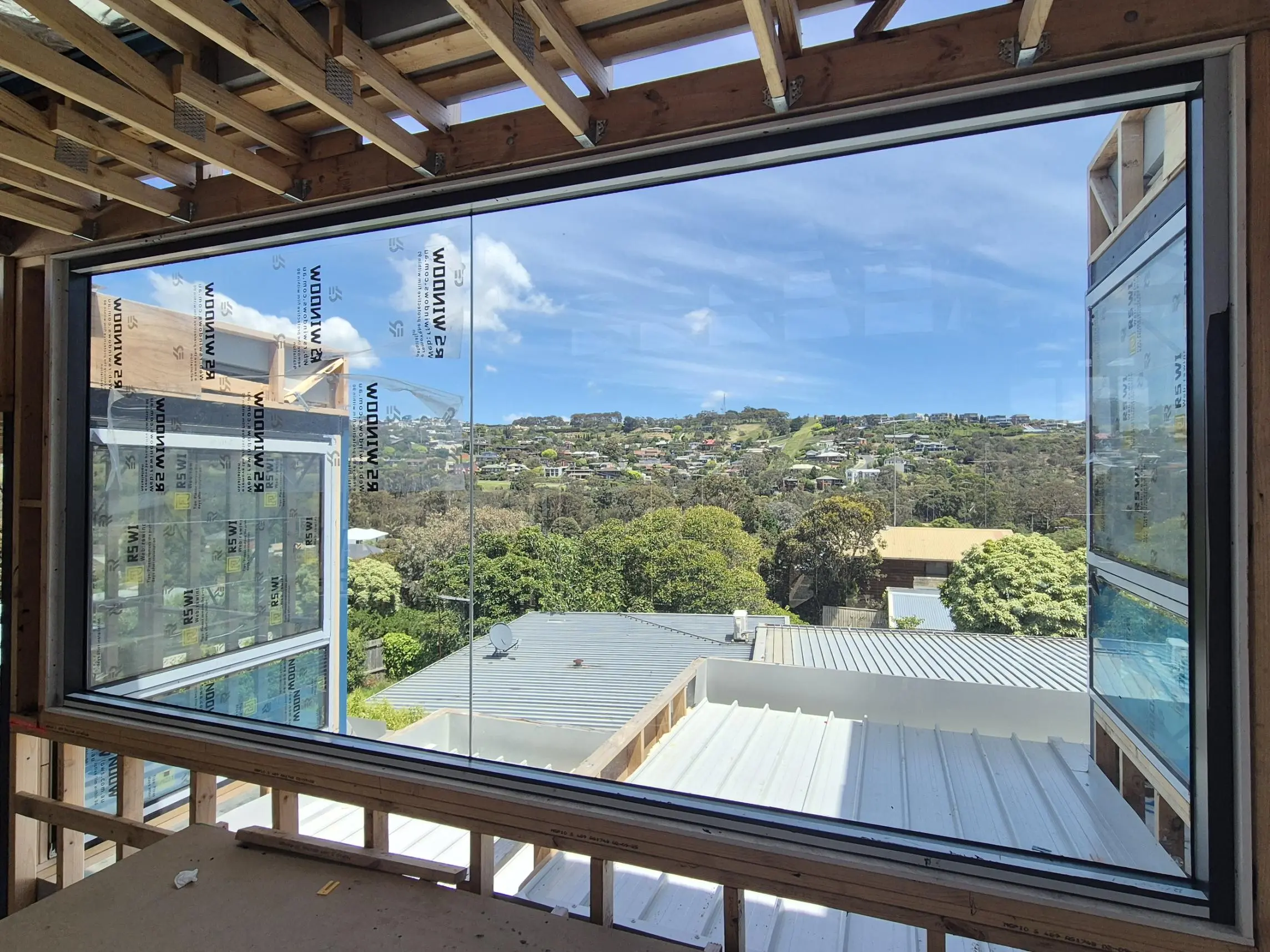
Installed windows and doors now provide:
- Natural light for internal work
- Weather protection
- Final confirmation of sightlines and ventilation
7. Practical Completion & Handover
1) What Happens
- Final inspections
- Defect rectifications
- Certification and occupancy approval
- Handover to homeowner
2) At this point, all windows and doors should be:
- Fully installed
- Tested for operation
- Compliant with AS2047 standards
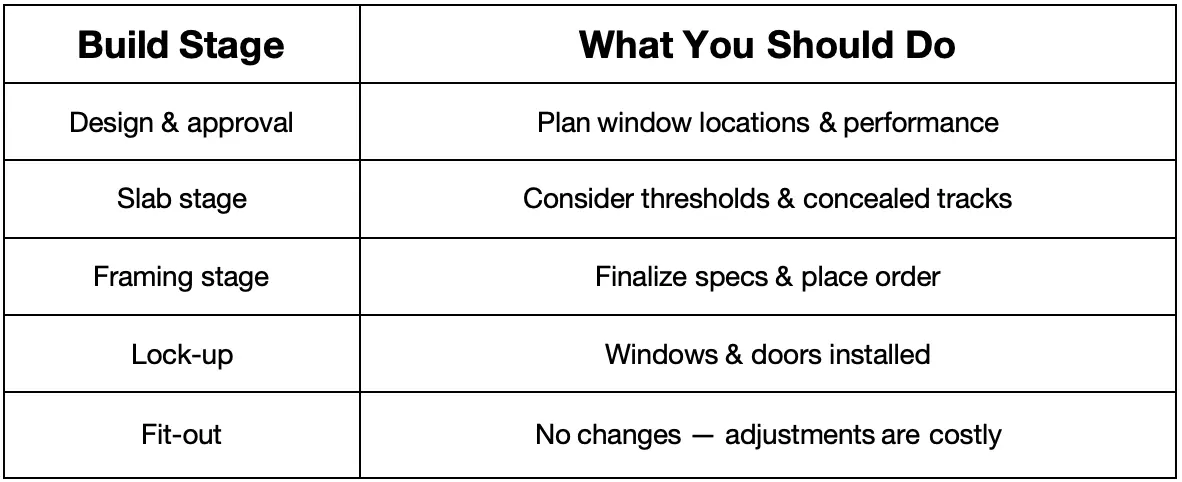
Quick Reference: When to Prepare & Order Windows
Common Mistakes to Avoid
1. Waiting until lock-up to choose windows
2. Underestimating lead times
3. Changing opening sizes after ordering
4. Not coordinating sliding door tracks with slab design
Final Thoughts
Understanding the Australian home building sequence helps you make smarter decisions — especially when it comes to windows and doors.
By planning early and ordering at the right stage, you avoid delays, protect your budget, and ensure the best result for your home.
Contact Us
Building a new home or currently at framing stage?
Our team can help you review your plans, confirm opening sizes, and recommend window and door systems that suit your build timeline and design goals.
Contact us today to get your windows and doors organised at the right time — without stress or delays.