


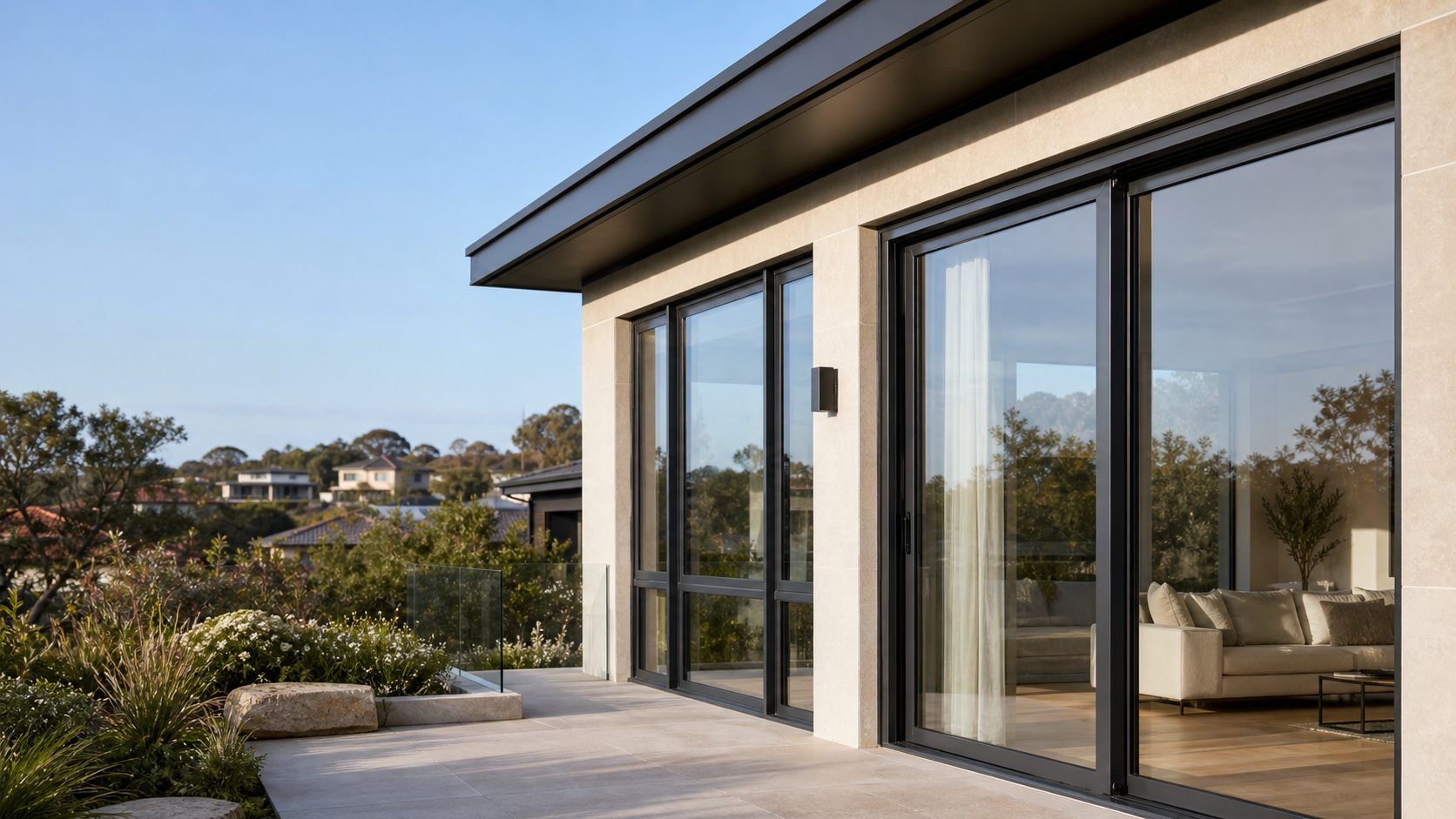
RS Doors & Windows is an Australian aluminium windows and doors supplier that helps Sydney homeowners, builders and designers compare a proposed system, glazing package, installation scope and supporting documentation before they commit to an order.
For a reliable Sydney supplier, look beyond a short list of names or the lowest total price. Choose the business that can match a suitable aluminium system to your project, provide current documentation for the specified configuration, explain the glazing and performance data, and remain accountable for measurement, delivery, installation and after-sales support. At RS Doors & Windows, that conversation can begin with drawings, opening sizes, the building type and your priorities—not with a requirement that you already know the right series.
This is deliberately a buyer’s guide rather than a ranking of local businesses. A supplier that is right for a replacement window may not be right for a large coastal slider, an architect-designed home or a multi-unit schedule. The seven checks below give you a repeatable way to compare quotes on the same basis.
At a glance: compare suppliers on evidence, not impressions
How we assess a reliable aluminium windows and doors supplier in Sydney
The checks in this guide reflect the questions Sydney buyers should be able to put to any supplier. They are not a claim that one business is universally better than another. We look for an evidence-led quotation, project-specific selection, transparent scope and a clear service pathway.
For energy performance, it is useful to ask about the whole window or door rather than glass alone. The NCC considers combined glass-and-frame performance when addressing total system U-values and SHGCs for external glazing. The NCC’s external-glazing provisions also show why climate, orientation and solar exposure belong in the selection discussion.
1. Confirm project-specific compliance evidence
Ask what documentation applies to the exact opening, configuration and project—not merely what a supplier can show for its broader range. The Australian Glass and Window Association (AGWA) explains that its compliance certificates are intended as proof of compliance for supplied products and projects, and that its certificate resources are aligned with AS 2047:2014 and AS 1288:2021. Review the AGWA compliance resources and ask the supplier to explain what is relevant to your order.
At RS Doors & Windows, our product documentation includes an AS 2047 StandardsMark certificate (SMK40453) and supporting AS 1288, AGWA and WERS materials. The applicable documentation still needs to be confirmed against the selected series, size, glazing, wind classification, location and installation scope. That distinction is important: a certificate supports a listed configuration; it is not a blank approval for every possible window or door.
For homes, apartments and commercial projects alike, keep the final schedule, certificate references and glass information with your project records. If the design changes, revisit the documentation before production is released.
2. Compare the complete specification, not the headline price
Two quotations can both say “aluminium sliding door” while describing materially different products. Ask each supplier to set out the frame series, opening type, panel layout, overall size, glass build-up, hardware, screen, powder-coat finish, sill or threshold arrangement, delivery and installation inclusions.
This is where a reliable supplier earns trust: the salesperson should be able to identify what is included, what is excluded and what remains subject to technical review. For instance, large openings must be considered against panel weight, glass, rollers, track and sill design, drainage, exposure, access, structural support and installation tolerance.
RS offers residential, commercial, thermally broken and slimline aluminium systems. A straightforward fixed or awning opening may suit a different system from a large indoor–outdoor sliding door. We prefer to compare proposed solutions line by line—system, glass, hardware, finish, delivery and installation—rather than treating the total price as the only decision point.
3. Ask for whole-window thermal information that suits the home
Sydney projects can have very different solar exposure, glazing areas and comfort priorities. A thermal break changes the frame path; double glazing changes the glass unit. They can be used together, but neither label alone tells you how the complete opening will perform.
Ask for the whole-window U-value and SHGC, as well as the frame and glass configuration behind them. The Australian Government’s YourHome guidance explains that U-value describes heat conduction through the whole window, including glass and frame, and that the frame has a significant effect on thermal performance. Its glazing guide also recommends considering orientation, shading, thermal mass and weather sealing together.
WERS is a practical reference point where a rated product is relevant. The Window Energy Rating Scheme rates the energy performance of windows and glazed doors based on their annual impact on a whole building in Australian climates. Ask for data that applies to the offered configuration, rather than assuming a rating for one product will transfer to every size or glass option.
RS thermally broken systems include options such as RS60, RS85 and RS105, while slimline concepts such as RS138 and RS168 are designed around narrow sightlines and large-format glazing. Final selection should be confirmed against the project’s size, glass, exposure, thermal target and engineering requirements.
4. Treat installation and interfaces as part of the product
The frame is only one part of a completed opening. Before you accept a quote, establish who measures the opening, who confirms site readiness, and who is responsible for fixing, waterproofing interfaces, drainage, sealant, protection, adjustment and handover. For a renovation, ask how the existing opening, access, water management and disruption will be assessed.
Reliable suppliers do not treat these details as an afterthought. They set out the boundary between supply and installation, identify any builder or trade interfaces, and explain what must be resolved before installation. This is particularly important for large sliders, bifolds, commercial systems and sites with exposure, façade or floor-level constraints.
RS provides local consultation, measurement, delivery, installation and after-sales services through Sydney, Melbourne and Adelaide locations. For projects outside those locations, availability depends on project scope and location; it should be confirmed before an order is placed.
5. Check the programme from design confirmation to handover
Ask for a programme that separates design approval, production, shipping or freight, delivery, site readiness and installation. A single lead-time figure is less useful than a sequence with clear dependencies.
RS typically advises an overall order period of approximately 10–12 weeks from deposit and design confirmation, including around 5–6 weeks for production and 4–5 weeks for shipping. This is an indicative planning guide, not a guarantee: configuration, quantity, glass, approvals, freight and site readiness can change the final programme. A dependable supplier should state those dependencies plainly and update the schedule if the project changes.
For builders, developers and architects, request a window-and-door schedule early. It makes it easier to coordinate opening sizes, handing, glass, finishes, delivery sequence and installation access before procurement becomes time-critical.
6. Read warranty terms and the after-sales pathway before signing
Do not settle for a vague statement that a product is “warranted.” Ask for the written warranty that will apply to the order, including the covered product, duration, conditions, exclusions, maintenance requirements and claim process. Separate frame, glass, hardware, finish and installation responsibilities where relevant.
Under Australian Consumer Law, warranties are additional to consumer guarantees and cannot remove those automatic rights. The ACCC’s warranty guidance explains that written warranties against defects must state how a claim is made, what the business will do and how long the warranty lasts.
RS warranty terms depend on the contract, product, glass, finish, hardware, installation scope, maintenance and supplier conditions. We provide the written warranty applicable to the confirmed order. If an after-sales issue is reported, the fastest assessment usually begins with the opening reference, symptoms, photographs, timing, installation context and contract scope.
7. Choose the supplier that can explain why the proposed system fits
The final question is simple: can the supplier explain why this system is suitable for this opening and this project? A credible answer should address use, size, exposure, wind and water performance, glass, operation, safety, thermal or acoustic priorities, finish, access, installation and maintenance.
For example, RS86 can suit broad residential or townhouse schedules, while RS100 and other project-specific systems can be considered for commercial or higher-density work. Thermally broken families may be relevant where comfort is a priority; slimline sliding concepts may be relevant where large glass areas and sightlines drive the brief. These are starting points, not automatic recommendations. Every opening still requires configuration review.
When comparing suppliers, choose the one that gives you a clear specification and a documented pathway to final confirmation. That is a more reliable basis for a Sydney window-and-door decision than a generic claim, a star rating without context or a price with missing scope.
Why Sydney buyers choose to start with RS Doors & Windows
RS Doors & Windows is an Australian-registered aluminium windows and doors brand that traces its business origins to 2005. Our Sydney team supports homeowners, builders, architects and project teams with drawing review, product selection, technical questions, samples, quotations, schedules, delivery planning, installation coordination and after-sales support.
We do not ask customers to choose a series in isolation. Send drawings and a schedule where available, or start with your suburb, building type, opening dimensions, preferred operation, glass and finish requirements, installation needs and desired timing. We will help define a suitable scope for technical review.
Disclosure
This guide is published by RS Doors & Windows. It is general information for comparing suppliers and is not engineering, certification or legal advice. Project-specific selection, compliance and performance must be confirmed for the final ordered configuration.