


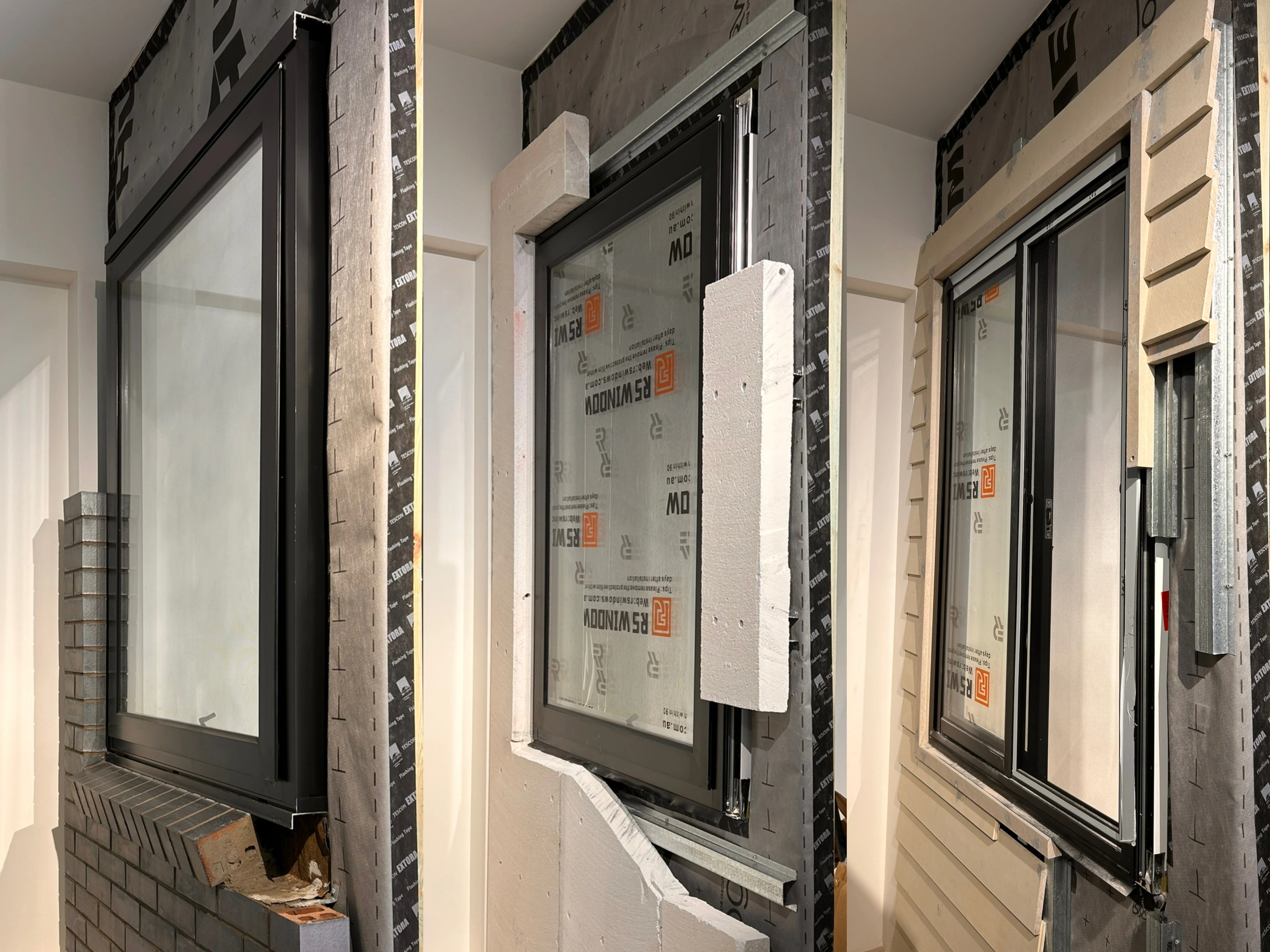
When building or renovating a home in Australia, wall construction plays a critical role in determining which window and door systems will work best.
Different wall types affect structural support, fixing methods, thermal performance, acoustic outcomes, and even design flexibility.
Common Wall Construction Types
Brick Veneer
A popular hybrid with an external brick wall, an air gap, an insulated timber or steel frame, and an internal plasterboard lining, providing good thermal performance and weather resistance.
Double Brick
Offers high thermal mass and durability but requires cavity insulation for modern energy efficiency.
Timber Frame
The most common residential method, using timber studs with noggings, clad externally with various materials, and lined internally with plasterboard (Gyprock).
Insulated Concrete Panels
Offers high thermal mass, high insulation values, and low maintenance.
This guide explains the most common Australian wall structures and provides practical recommendations on suitable window and door styles, helping homeowners, builders and designers make informed decisions from the early design stage.
Why Wall Construction Matters When Choosing Windows & Doors
In Australia, homes are built using a variety of wall systems depending on climate, budget, location and architectural style.
Choosing windows or doors without considering wall structure can lead to:
- Installation challenges
- Structural limitations
- Poor acoustic or thermal performance
- Increased costs or redesigns
Matching the right window and door system to the right wall structure ensures performance, longevity and compliance with Australian building standards.
1. Brick Veneer Construction
What It Is
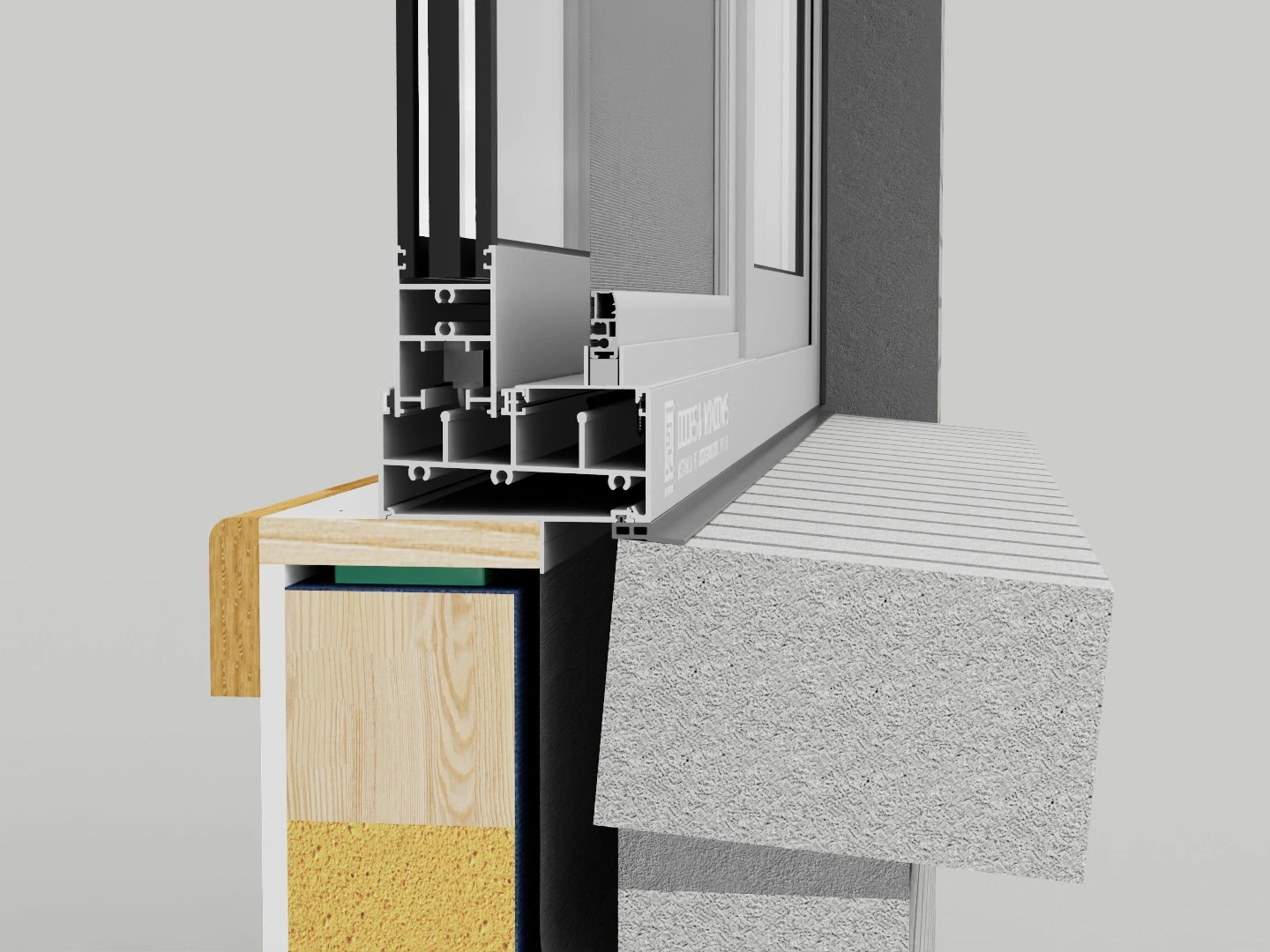
Brick veneer consists of a single external brick skin with a timber or steel frame behind it. It’s the most widely used residential wall system across Sydney, Melbourne, Brisbane and Adelaide.
Key Characteristics
- Lightweight structural frame
- Brick is non-load-bearing
- Flexible for window and door placement
Best Window & Door Options
Recommended Systems: Sliding windows & doors
Why: Easy installation, good cost balance
Recommended Systems: Awning & casement windows
Why: Strong sealing, great ventilation
Recommended Systems: Fixed windows
Why: Large glazing areas supported by frame
Installation Note:
Windows and doors are fixed directly into the timber or steel frame, with brickwork built around the opening.
2. Double Brick Construction
What It Is
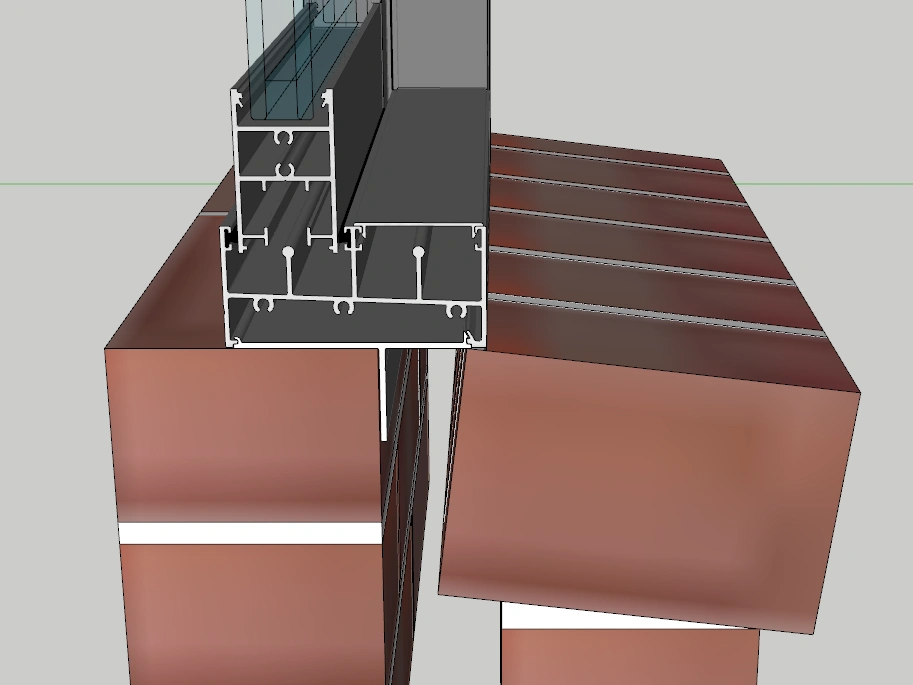
Two layers of brick with a cavity in between — common in older homes and some high-end builds.
Key Characteristics
- Heavy, load-bearing walls
- Excellent acoustic performance
- Less flexible for changes
Best Window & Door Options
Recommended Systems: Casement & awning windows
Why: Strong sealing, traditional fit
Recommended Systems: Fixed windows
Why: Structural stability
Recommended Systems: Sliding doors
Why: Requires proper lintels
Design Consideration:
Large openings are possible but require engineered lintels and early structural planning.
3. Timber Frame with Lightweight Cladding
What It Is
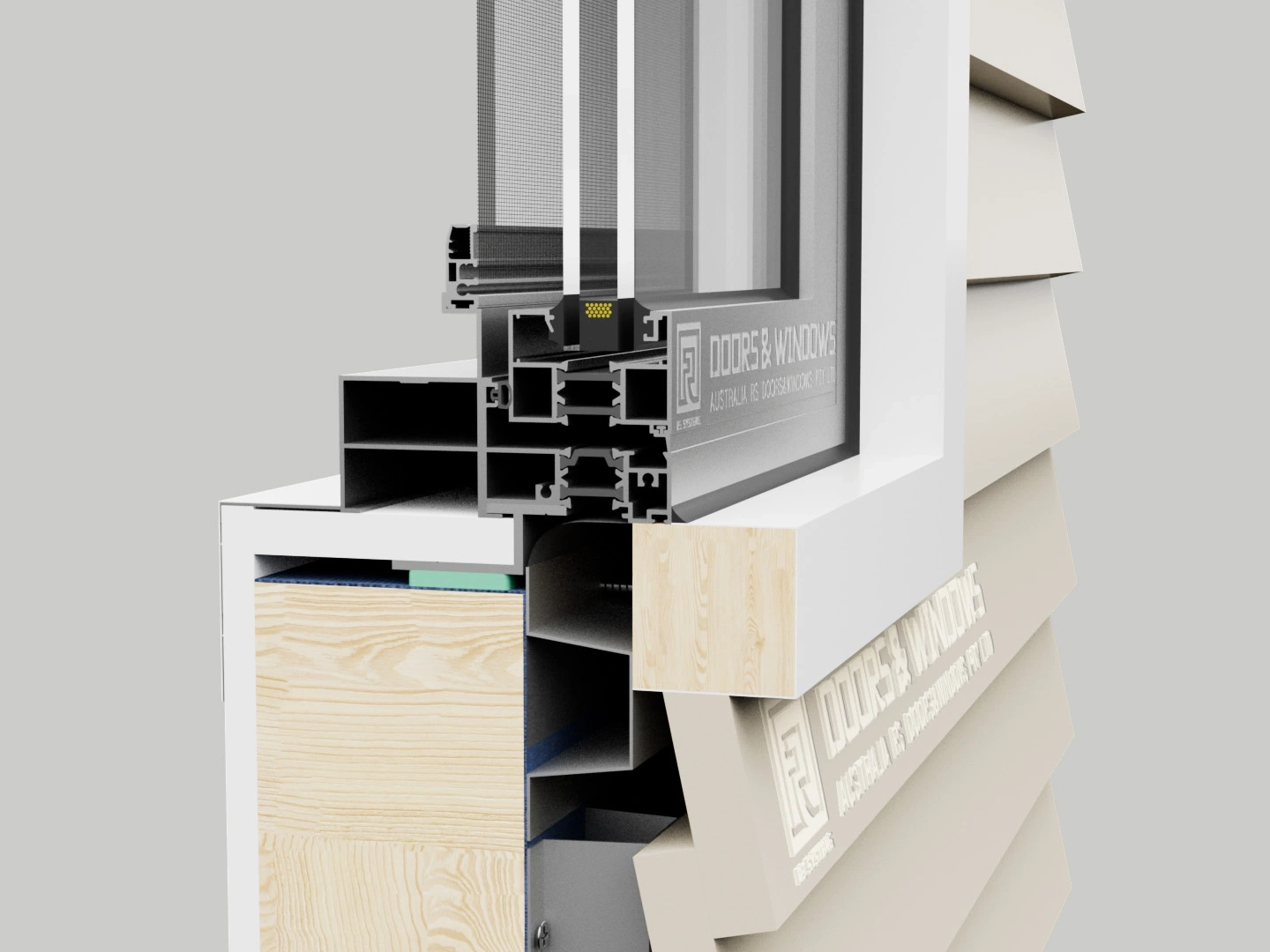
A timber frame paired with materials like fibre cement, weatherboard, or composite panels. Common in modern architectural and coastal homes.
Key Characteristics
- Lightweight and flexible
- Fast construction
- Excellent design freedom
Best Window & Door Options
Recommended Systems: Floor-to-ceiling fixed glass
Why: Minimal structural restriction
Recommended Systems: Casement & awning windows
Why: Good sealing with lightweight walls
This wall type is ideal for large glass panels and modern architectural designs.
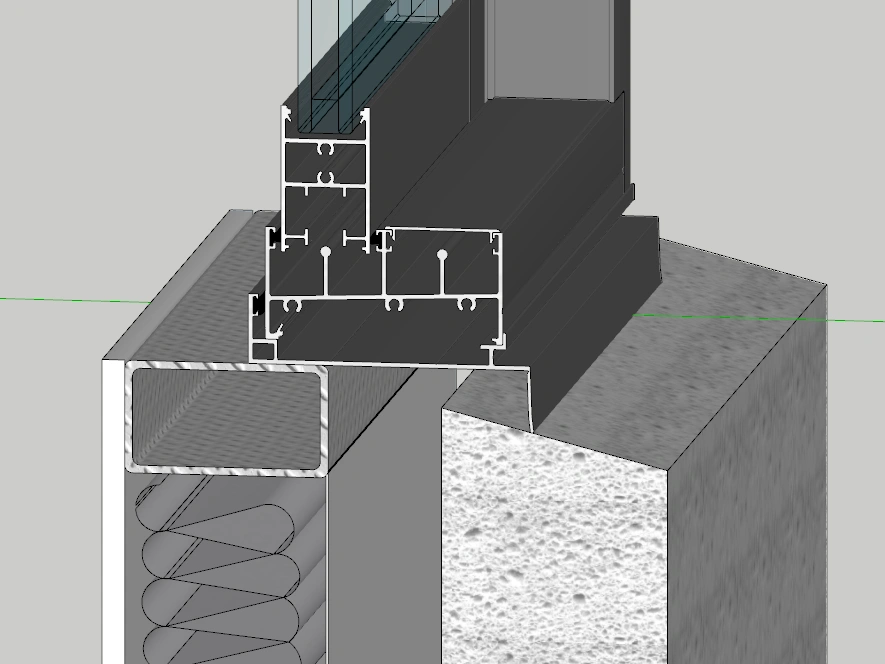
4. Concrete Construction
What It Is
Used in apartments, townhouses and some modern luxury homes.
Key Characteristics
- Extremely strong and stable
- High acoustic performance
- Requires precision planning
Best Window & Door Options
Recommended Systems: Fixed windows
Why: Structural compatibility
Recommended Systems: Commercial-grade systems
Why: Required for performance
Important:
All openings must be pre-formed or core-cut, so window and door sizes must be finalised early.
Thermal & Acoustic Considerations
Wall structure affects how well windows perform acoustically and thermally.
For best results:
- Pair thermally broken aluminium frames with insulated walls
- Use laminated or double-glazed glass in high-noise areas
- Ensure proper sealing at wall junctions
Australian Standards & Compliance
All window and door systems should comply with:
- AS2047 (Windows & External Glazed Doors)
- NCC / BASIX requirements for energy efficiency
Final Thoughts
Understanding wall construction is essential when selecting windows and doors.
By aligning wall type, window style, glass specification and frame system, you can achieve better performance, smoother installation and a more refined architectural outcome.
Contact Us
Planning a new build or renovation in Australia?
Our team can help assess your wall structure and recommend window and door systems that suit both your design goals and structural requirements.
Contact us today for expert advice or visit one of our showrooms to explore our full range of systems.
About the publisher
This article is published by RS Doors & Windows, the customer-facing brand of Australia RS Doors & Windows Pty Ltd (ABN 59 629 271 227). RS is an Australian-registered aluminium window and door supplier with showroom and service locations in Sydney (Belmore), Melbourne (Clayton) and Adelaide (Marleston). Local consultation, measurement, delivery, installation and after-sales services are provided in Sydney, Melbourne and Adelaide; for other Australian locations RS supplies product only, and installation can be discussed on a project basis.
Our published AS 2047 evidence — StandardsMark certificate SMK40453 and the scope set out in its Schedule — is available on our certification page, and completed projects across Sydney, Melbourne and Adelaide are listed in our project showcase.
Last updated: 13 October 2026.